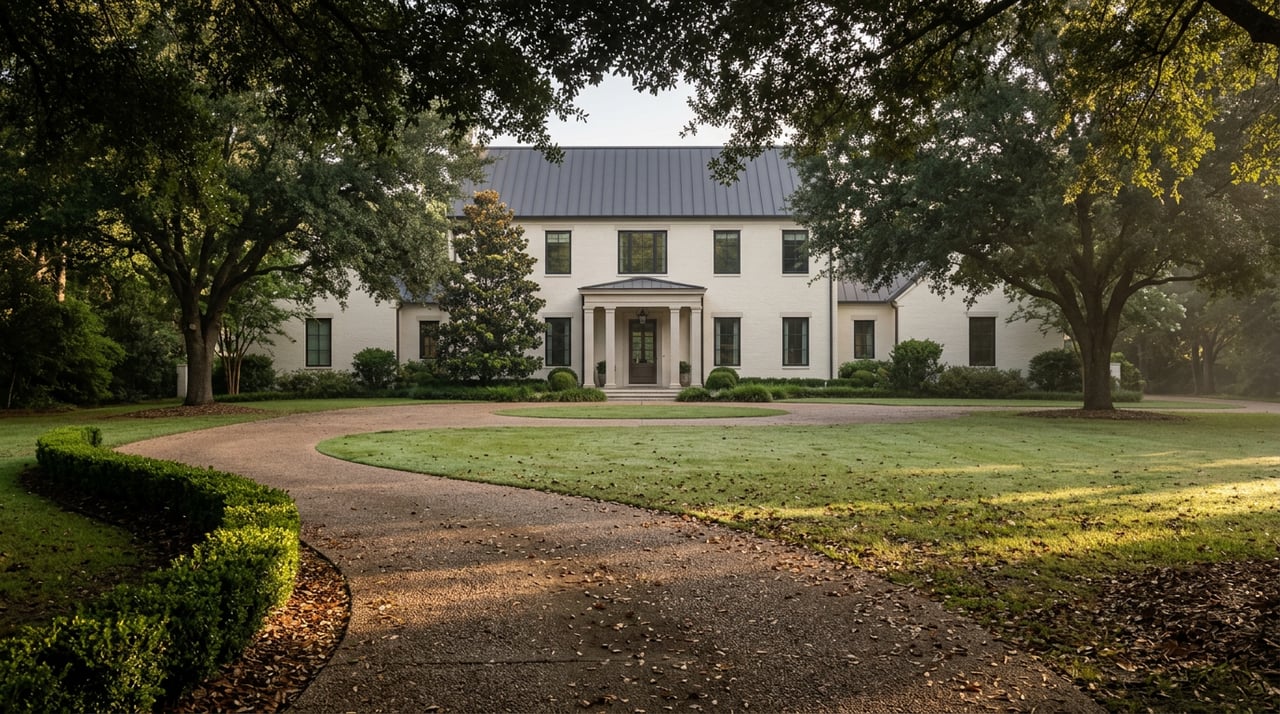
Piney Point has banned commercial activity of any kind since it incorporated, as reported by the Houston Chronicle.
That single rule is a small window into something larger about how the six Memorial Villages work, and why they behave differently from the rest of Houston even when the citywide market shifts underneath them.
Houston Said No to Zoning Three Times
Houston voters rejected zoning in 1948, in 1962, and again in 1993. The city remains the largest in the United States without one, and it manages land use instead through deed restrictions, private covenants written into subdivisions and enforced by civic associations or, when disputes escalate, by the courts. It's a system that has shaped most of the city for seventy years, and it works reasonably well for the neighborhoods that maintain it. Rice University’s Kinder Institute for Urban Research notes that those restrictions typically only get enforced when a neighbor files a complaint.
The six communities that make up the Memorial Villages, Piney Point, Bunker Hill, Hedwig, Hilshire, Hunters Creek, and Spring Valley, chose a different tool entirely.
Six Cities, One Answer
In the 1950s, as Houston expanded and began annexing the unincorporated land around it, these six communities incorporated as their own cities rather than be pulled into Houston's boundaries. That decision gave residents something deed restrictions alone can't offer: an actual municipal government with ordinance power, its own police enforcement, and rules that don't need a homeowners' vote to renew every few decades.
Piney Point's version of that power includes a minimum lot size of 40,000 square feet and a standing prohibition on commercial property, a rule that has held since incorporation. Piney Point's roots go back further than the incorporation date. Its name comes from pine trees that once marked a stretch of the San Felipe-to-Harrisburg Trail, a landmark from before Houston itself was founded in 1836, and the village traces its history to the 1820s, according to reporting in the Houston Chronicle. Mayor Aliza Dutt described the character that strict rules and small scale produce in blunt terms: residents know each other well enough to help without being asked, and to give space without being told to.
"It's definitely one of those places where we all generally know each other, or know of each other."
Mayor Aliza Dutt, quoted in the Houston Chronicle
The six villages don't all handle enforcement the same way. Piney Point, Bunker Hill, and Hunters Creek share the Memorial Villages Police Department. Hedwig and Spring Valley maintain their own separate departments. All six share a single village fire department. Tax rates differ too: Hedwig Village's municipal rate runs around 0.3363 percent, while Bunker Hill's sits closer to 0.271 percent, on top of the same Spring Branch ISD rate that applies across the district.
| Village | Police coverage | Village-only tax rate |
|---|---|---|
| Piney Point Village | Shared, Memorial Villages PD | Not published in this research |
| Bunker Hill Village | Shared, Memorial Villages PD | Approximately 0.271% |
| Hunters Creek Village | Shared, Memorial Villages PD | Not published in this research |
| Hedwig Village | Independent | Approximately 0.3363% |
| Spring Valley Village | Independent | Not published in this research |
| Hilshire Village | Not specified | Not published in this research |
The gaps in that table aren't a shortcut. They're the point. Anyone comparing two houses across village lines should confirm the specific tax rate and police arrangement for that address before assuming the villages are interchangeable. They share a reputation. They don't share a rate sheet.
How Piney Point Limits New Supply
Houston's broader housing market is easing into a buyer-friendlier stretch. Single-family sales across the city rose 1.6 percent year over year in July 2026, but active inventory hit a record 40,750 listings, the highest number the Houston Association of Realtors has ever recorded. Homes sat on the market an average of 53 days that month, up from 50 a year earlier, and the citywide median price landed at $340,000, up just 0.6 percent year over year. That's a market with more choice and less urgency than it's had in years.
Piney Point's 40,000-square-foot minimum lot size means a lot that size cannot be subdivided into two smaller ones, and the village cannot add a multifamily building or a retail strip to absorb overflow demand. These rules constrain what can be built in Piney Point, independently of Houston's citywide inventory.
What the Land Is Actually Worth
An HAR analysis of Village lot sales found that lots between 30,000 and 56,000 square feet, the size range residents call a Village Acre, averaged $2.05 million. New construction in that same sample averaged $7.092 million and $727 per square foot. Those numbers only make sense once you separate what's being sold: the finished house is one line item, but the legally protected scarcity of the land underneath it is another, and in the Villages the second line item usually carries more weight than the first.
That reframes the comparison buyers should actually be running. A renovated ranch home from the 1970s on an acre-plus lot in Bunker Hill can outprice a newer, better-finished home elsewhere in Houston, not because the finishes are superior but because of the lot itself. Before comparing a Village listing to something outside the six cities, it's worth asking a short list of questions that a standard listing sheet won't answer:
- Is the restriction on this property enforced by a municipal police department or by a civic association that depends on neighbor complaints?
- Does the restriction have a renewal date, or is it permanent as part of the city's ordinance?
- What is the minimum lot size on this specific block?
- Which police department has jurisdiction at this address, and how does that affect anything you'd want to verify separately, like insurance quotes?
What This Means If You're Comparing Neighborhoods
Buyers weighing the Memorial Villages against a deed-restricted-only neighborhood inside Houston's Inner Loop, whether that's River Oaks, Southampton Place, or somewhere similar, aren't just comparing lot sizes or price per square foot. They're comparing two different enforcement systems: one built on neighbors reporting violations to a homeowners' association, and one built on an actual city government with police who can act on it. That difference doesn't show up in a comparative market analysis, but it's a large part of why the Villages have held their pricing shape through a citywide slowdown that's touched nearly everywhere else.
If you're trying to figure out what a specific address in Piney Point, Bunker Hill, Hedwig, Hunters Creek, Spring Valley, or Hilshire is actually worth, and what its village's particular rules mean for your plans, the Bryan Beene Group can walk through the address-level details that don't show up on a listing page. Get a Free Home Valuation and start with the specifics that matter for your situation.
This article is general information, not legal, tax or financial advice. Consult a qualified professional about your situation.